
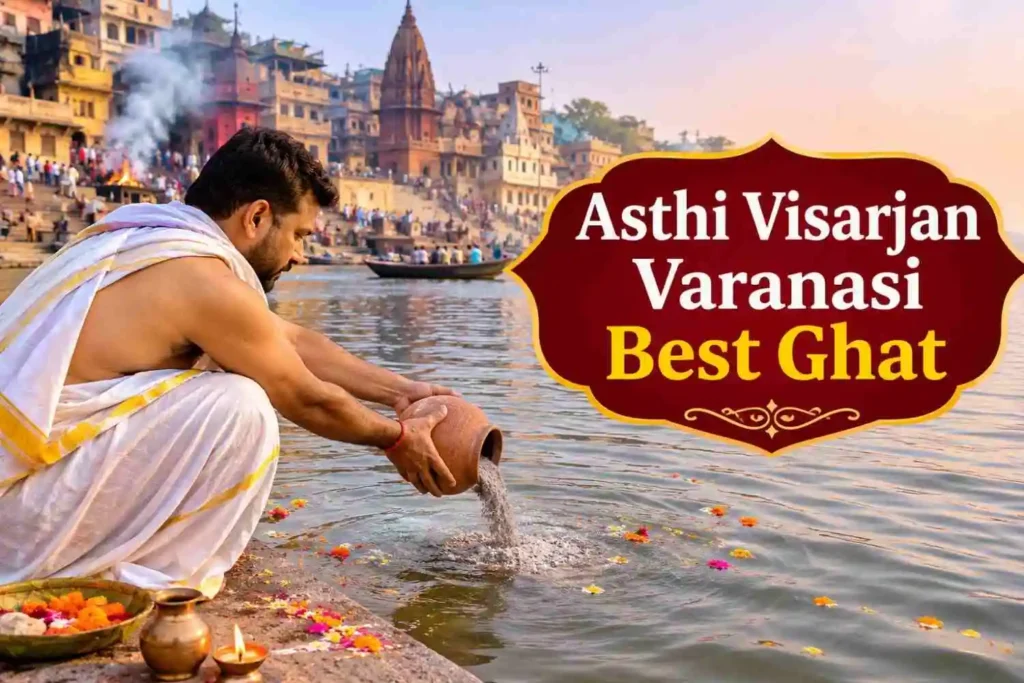
Which Ghat Is Best for Asthi Visarjan in Varanasi? A Complete Guide to 84 Ghats of Kashi Visiting Varanasi for the first time to perform Asthi Visarjan can be confusing for many families. People often wonder which ghat is the most suitable for immersing the ashes of their loved ones in the holy River Ganga. With so many ghats along the riverfront, choosing the right place is not always easy, especially for those who have little knowledge of Kashi and its religious traditions.
Varanasi is traditionally associated with 84 ghats along the banks of the Ganga. Each ghat has its own history, religious importance, local traditions, and cultural identity. However, not every ghat is equally associated with Asthi Visarjan.
According to Hindu religious beliefs, the River Ganga is sacred, and performing Asthi Visarjan in the holy Ganga at Kashi is considered spiritually significant. Families can perform this ritual at a suitable Ganga ghat according to their family traditions, religious preferences, and the guidance of their Pandit Ji.
Among all the ghats, Manikarnika Ghat and Harishchandra Ghat are particularly well known for cremationrelated rituals and Asthi Visarjan in Varanasi.
Among all the ghats, Manikarnika Ghat and Harishchandra Ghat are particularly well known for cremation-related rituals and Asthi Visarjan in Varanasi.
Which Ghat Is Best for Asthi Visarjan in Varanasi?
There is no single ghat that every family must choose for Asthi Visarjan. The right location depends on family traditions, convenience, and the type of religious ceremony being performed.
Some of the commonly preferred ghats are:
- Manikarnika Ghat
- Harishchandra Ghat
- Assi Ghat
- Kedar Ghat
- Panchganga Ghat
Among these, Manikarnika Ghat and Harishchandra Ghat are especially associated with last rites and cremation traditions.
Let’s understand the importance of these ghats before making a decision.
1. Manikarnika Ghat – One of the Most Important Places for Asthi Visarjan
Manikarnika Ghat is one of the oldest and most sacred cremation ghats in Varanasi. It holds a special place in Hindu religious traditions and is closely connected with the last rites performed in Kashi.
Many families visit Manikarnika Ghat to perform Asthi Visarjan after the cremation of a family member. The ghat is traditionally associated with the belief that death in Kashi and the sacred presence of Lord Shiva have special spiritual significance.
For families coming from different parts of India, Manikarnika Ghat is often one of the first places they consider for Asthi Visarjan.
The ritual is generally performed with the assistance of a knowledgeable Pandit Ji, who guides the family through the required prayers and traditional procedures.
Why do families choose Manikarnika Ghat?- It is one of the most recognised cremation ghats in Kashi.
- It has a long association with Hindu last rites.
- Many families traditionally perform Asthi Visarjan here.
- It is an important destination for pilgrims visiting Varanasi for ancestral rituals.
2. Harishchandra Ghat – Another Important Ghat for Asthi Visarjan
Harishchandra Ghat is another major cremation ghat in Varanasi. It is traditionally associated with King Harishchandra, who is remembered in Hindu stories for his commitment to truth and righteousness.
Like Manikarnika Ghat, this place is closely connected with cremation ceremonies and last rites.
Families who prefer a traditional cremation ghat for Asthi Visarjan may consider Harishchandra Ghat. The ritual can be arranged with the guidance of a Pandit Ji according to the family’s customs.
Why is Harishchandra Ghat important?- It is one of the principal cremation ghats of Varanasi.
- It has a strong connection with the story of King Harishchandra.
- Families visit this ghat for various last rites and related religious ceremonies.
- It is an established place for traditional Hindu funeral customs.
3. Dashashwamedh Ghat – Famous for Ganga Aarti
Dashashwamedh Ghat is among the most famous and frequently visited ghats in Varanasi. It is particularly known for its spectacular evening Ganga Aarti.
Every evening, priests perform the Aarti with large lamps, incense, bells, conch shells, and devotional chants. Thousands of devotees and visitors gather to witness this spiritual ceremony.
Although Dashashwamedh Ghat is primarily known for Ganga Aarti and religious gatherings, families may explore suitable arrangements for rituals according to local customs and guidance.
4. Assi Ghat – A Popular Place for Morning Rituals
Assi Ghat is located towards the southern end of the main Varanasi ghat area. It is especially popular among pilgrims, students, tourists, and local residents.
The ghat is famous for Subah-e-Banaras, a morning programme that includes Vedic chanting, devotional music, yoga, and prayers.
Many visitors come here early in the morning to take a holy dip in the Ganga and offer prayers to the rising sun.
Assi Ghat is also considered by some families for religious activities, including Asthi Visarjan, depending on local arrangements and family preferences.
5. Panchganga Ghat – A Ghat with Ancient Religious Significance
Panchganga Ghat is considered one of the important religious locations in Kashi. According to traditional beliefs, five sacred rivers are associated with this place.
The ghat is known for its historical and spiritual importance. Bindu Madhav Temple, located nearby, adds to its religious significance.
Devotees visit Panchganga Ghat for prayers, holy bathing, and other religious activities.
6. Kedar Ghat – Popular Among Shiva Devotees
Kedar Ghat is another well-known ghat in Varanasi. It is particularly associated with Kedareshwar Temple, which is dedicated to Lord Shiva.
The ghat attracts many devotees throughout the year. Its traditional atmosphere and religious importance make it a popular place for pilgrims.
Visitors can also explore suitable arrangements for religious ceremonies here with the guidance of local priests.
Other Important Ghats of Varanasi
Apart from the ghats mentioned above, Varanasi has several other historically and religiously significant ghats.
Each has its own identity. Some are associated with temples, some with ancient traditions, while others are known for architecture, religious activities, and cultural heritage.
For a broader historical overview, you can also read this guide to the Ghats of Varanasi.
Here are the names of the ghats commonly included in lists of the Varanasi riverfront:
- Assi Ghat
- Ganga Mahal Ghat
- Rewa Ghat
- Tulsi Ghat
- Bhadaini Ghat
- Janaki Ghat
- Mata Anandamayi Ghat
- Vaccharaja Ghat
- Jain Ghat
- Nishad Ghat
- Prabhu Ghat
- Panchkota Ghat
- Chet Singh Ghat
- Niranjani Ghat
- Mahanirvani Ghat
- Shivala Ghat
- Gularia Ghat
- Dandi Ghat
- Hanuman Ghat
- Prachin Hanuman Ghat
- Karnataka Ghat
- Harishchandra Ghat
- Lali Ghat
- Vijayanagaram Ghat
- Kedar Ghat
- Chauki Ghat
- Kshemeshwar Ghat
- Manasarovar Ghat
- Narad Ghat
- Raja Ghat
- Khori Ghat
- Pandey Ghat
- Sarveshwar Ghat
- Digpatia Ghat
- Chausatthi Ghat
- Rana Mahal Ghat
- Darbhanga Ghat
- Munshi Ghat
- Ahilyabai Ghat
- Shitala Ghat
- Dashashwamedh Ghat
- Prayag Ghat
- Rajendra Prasad Ghat
- Man Mandir Ghat
- Tripura Bhairavi Ghat
- Meer Ghat
- Phuta Ghat
- Nepali Ghat
- Lalita Ghat
- Bauli Ghat
- Jalasayi Ghat
- Khirki Ghat
- Manikarnika Ghat
- Bajirao Ghat
- Scindia Ghat
- Sankatha Ghat
- Bhonsala Ghat
- Naya Ghat
- Ganesh Ghat
- Mehta Ghat
- Rama Ghat
- Jatara Ghat
- Raja Gwalior Ghat
- Mangala Gauri Ghat
- Veni Madhav Ghat
- Panchganga Ghat
- Durga Ghat
- Brahma Ghat
- Bundi Parkota Ghat
- Adi Shitala Ghat
- Lala Ghat
- Hanumangarhi Ghat
- Gaya Ghat
- Badri Narayana Ghat
- Trilochana Ghat
- Gola Ghat
- Nandeshwar Ghat
- Sakka Ghat
- Telianala Ghat
- Prahlada Ghat
- Raj Ghat
- Adi Keshava Ghat
Note: The number and naming of ghats can vary between different historical and local lists. Some lists count individual sections separately, while others combine adjoining ghats. Therefore, 84 is a commonly cited traditional figure rather than a guarantee that every list will contain 84 distinct names.
Can Asthi Visarjan Be Performed at Any Ghat in Varanasi?
This is one of the most common questions asked by families visiting Kashi.
According to Hindu beliefs, the Ganga is sacred throughout its course, and its spiritual importance is not limited to one particular ghat. Asthi Visarjan may be performed at a suitable location along the Ganga, subject to local arrangements and applicable restrictions.
However, every ghat has a different purpose and local tradition. Cremation ghats, bathing ghats, and places known for temple worship have different environments.
For this reason, families who are visiting Varanasi for the first time should consult an experienced Pandit Ji before selecting a location.
It is also important to follow local instructions and avoid performing rituals in restricted or unsuitable areas.
Which Ghat Should You Choose for Asthi Visarjan?
If you are visiting Varanasi specifically for Asthi Visarjan, here is a simple guide:
| Ghat | Known for |
|---|---|
| Manikarnika Ghat | Cremation traditions and Asthi Visarjan |
| Harishchandra Ghat | Cremation and last rites |
| Assi Ghat | Morning rituals and religious activities |
| Kedar Ghat | Kedareshwar Temple and Shiva worship |
| Panchganga Ghat | Ancient religious significance |
| Dashashwamedh Ghat | Evening Ganga Aarti |
For families who want a traditional cremation-related setting, Manikarnika Ghat and Harishchandra Ghat are the two main locations to consider.
Need Help with Asthi Visarjan in Varanasi?
If you are visiting Kashi for the first time, choosing a suitable ghat and arranging the required rituals can be confusing. Our team can help you understand the available options and coordinate with a Pandit Ji.
Pind Daan Kashi
Call / WhatsApp: +91 8707749720
WhatsApp Now Call NowArrange Asthi Visarjan in Varanasi with Pind Daan Kashi
Families travelling from different states often find it difficult to understand the local arrangements, choose a suitable ghat, and organise the complete ritual.
Pind Daan Kashi provides assistance with Asthi Visarjan arrangements in Varanasi. Families can contact us to discuss the preferred ghat, ritual requirements, and availability of a Pandit Ji.
If you are unable to travel to Varanasi, you can also explore our Online Asthi Visarjan Service in Varanasi and Prayagraj, which provides information about arranging the ritual remotely from different parts of India and abroad.
For more details about the traditional procedure, locations, and arrangements, visit our guide on Asthi Visarjan in Kashi.
Families who also wish to perform ancestral rites can learn more about Pind Daan in Kashi and its traditional importance.
Whether you need Asthi Visarjan only or wish to perform Asthi Visarjan along with Pind Daan, you can contact our team for information about the available arrangements.
Frequently Asked Questions
1. Which is the best ghat for Asthi Visarjan in Varanasi?
Manikarnika Ghat and Harishchandra Ghat are among the most commonly preferred locations because of their association with cremation traditions and last rites.
2. Can Asthi Visarjan be performed at Assi Ghat?
Families may consider Assi Ghat for Asthi Visarjan, subject to suitable local arrangements and guidance from a Pandit Ji.
3. Is Manikarnika Ghat famous for Asthi Visarjan?
Yes. Manikarnika Ghat is one of the most recognised cremation ghats in Varanasi and is closely associated with Hindu last rites.
4. Is Harishchandra Ghat suitable for Asthi Visarjan?
Harishchandra Ghat is another important cremation ghat where families traditionally arrange last rites and related rituals.
5. How many ghats are there in Varanasi?
Varanasi is commonly described as having 84 ghats. However, the exact count may vary depending on how individual ghat sections are classified.
6. Is Asthi Visarjan possible without Pind Daan?
Yes. Asthi Visarjan and Pind Daan are separate religious rituals. Families can perform Asthi Visarjan alone or arrange both rituals according to their traditions.
7. Do I need a Pandit Ji for Asthi Visarjan?
Families generally take the guidance of a Pandit Ji to perform the traditional prayers and procedures correctly.
8. How can I arrange Asthi Visarjan in Varanasi?
You can contact Pind Daan Kashi at +91 8707749720 to discuss the suitable ghat, ritual requirements, and arrangements.
Final Words
Choosing the right ghat for Asthi Visarjan is an important decision for families visiting Varanasi. Manikarnika Ghat and Harishchandra Ghat are especially well known for their association with Hindu last rites, while Assi, Kedar, and Panchganga Ghats have their own religious and cultural significance.
The most important thing is to perform the ritual with faith, respect, and proper guidance according to your family’s traditions.
If you are visiting Kashi for the first time and are unsure about the arrangements, Pind Daan Kashi can help you understand the available options.
For assistance, contact +91 8707749720.
- Which Ghat Is Best for Asthi Visarjan in Varanasi? A Complete Guide to 84 Ghats of Kashi
- Online Asthi Visarjan Service in Varanasi and Prayagraj Book from Anywhere in India or Abroad
- Pind Daan in Varanasi Packages
- Cost of Asthi Visarjan in Varanasi Pandit Charges
- Asthi Visarjan with Pind Daan in Varanasi